
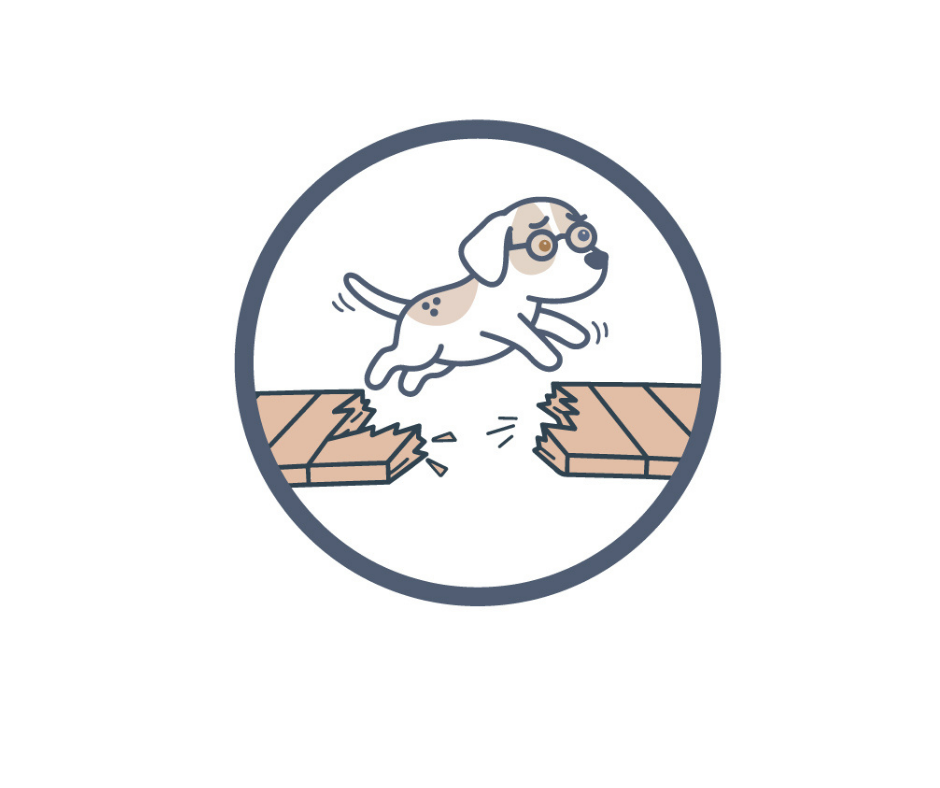
Getting out is only the beginning.
An enormous amount of rescue infrastructure is designed to get dogs out of danger and into placements. Considerably less exists to support everything that must happen between rescue and lasting belonging.
The match isn’t the finish line.
Belonging is.
The Framework
Rescue → The Missing Middle™ → Belonging
The Missing Middle™ is the gap. The Bridge to Belonging™ is the infrastructure we build across it.
The Bridge to Belonging™
The bridge spans the gap. These stages are not a rigid sequence — dogs may move through them differently, revisit stages, or need multiple placements.
What It Is
The Missing Middle™
The largely unsupported space between rescue and true belonging.
Getting a dog out is not the same thing as getting a dog Home. Placement is an event. Belonging is a process.
The match is extraordinarily important, but the match is not the finish line. From the moment a dog leaves a shelter or enters foster care, an entirely different part of the journey begins — one that too often unfolds without the infrastructure, information, preparation, or support needed to give that dog and the humans responsible for them their best chance of succeeding together.
The Missing Middle™ is the gap.
The Bridge to Belonging™ is what we build across it.
Where Fostering Belongs
Fostering Is Part of The Missing Middle™
Not a holding pattern before adoption — a critical environment in the journey.
Foster care is not just temporary housing. A thoughtfully supported foster home can help a dog stabilize while generating valuable real-world understanding that can improve future matching and support.
Foster homes provide safety — but they can also provide critical information about behavior, temperament, recovery, routines, environmental needs, compatibility, and the conditions under which a dog is most capable of thriving.
Fosters Need
What Fosters Can Reveal
From Movement to Transition
A dog can physically arrive somewhere long before they feel at Home.
Too much of today’s rescue infrastructure focuses on movement: getting the dog out, finding a foster, finding an adopter, completing the placement. But movement is not the same thing as transition, and placement is not the same thing as belonging.
Dogs need time to decompress, adjust, communicate, build trust, establish predictable routines, reveal behavior, form relationships, and become integrated into everyday life. Humans need realistic expectations, behavioral understanding, education, support, and sometimes course correction during that process.
When that transition isn’t adequately understood or supported, problems that might have been anticipated, interpreted, or addressed early can instead become reasons for another disruption, another return, and another move.
You Had Me At Woof™ is being built to address what happens in between.
The Response
The Bridge to Belonging™
The organizing framework connecting work already underway across You Had Me At Woof™ — and guiding what we build next.
The Bridge to Belonging™ is the infrastructure being built across The Missing Middle™ — connecting the work of understanding dogs, preparing people, and supporting the journey from rescue to lasting belonging.
As the Bridge develops, these pieces will become increasingly connected — so that what is learned about a dog, and what the humans supporting that dog need, doesn’t disappear at each handoff.
One Component of the Bridge
The Bridge to Belonging™ Curriculum
The educational layer of this work — a structured curriculum preparing the humans on both sides of a placement with the understanding, awareness, skill, discernment, and judgment that transitions require. Currently in development.